Afghan Manto to Turkish Manti: A 6,400 km Silk Road Dumpling Journey
Afghan Manto to Turkish Mantı: The 6,400 km Silk Road Dumpling Continuum
Across Central Asia and the Middle East, dumplings form a delicious culinary trail stretching thousands of kilometers. From Afghan manto to Turkish mantı, these parcels of dough reveal how travelers, traders, and empires carried cooking techniques along the Silk Road.
Although each dish has its own identity, the family resemblance is unmistakable: thin dough, savory fillings, careful folding, and a deep connection to home cooking.
A Shared Culinary Language
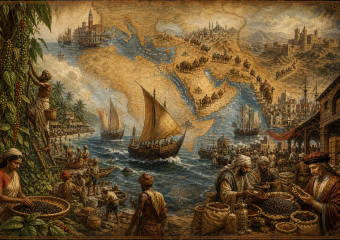
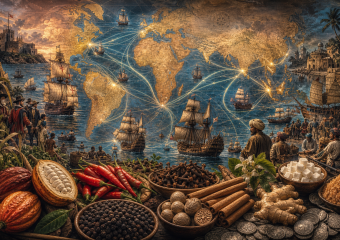
The Silk Road was more than a network for transporting silk and spices. It was also a route for exchanging ideas, ingredients, and kitchen traditions. Dumplings were especially suited to travel because their basic components—flour, water, meat, and onions—were widely available.
The technique was simple but adaptable:
- Roll dough into thin sheets.
- Add a seasoned filling.
- Fold each piece into a compact parcel.
- Steam, boil, or bake it.
- Serve with a sauce, broth, or cultured dairy.
As the tradition moved between communities, local cooks shaped it according to regional tastes, available ingredients, and religious customs.
Afghan Manto: Steamed Parcels with Layers of Flavor
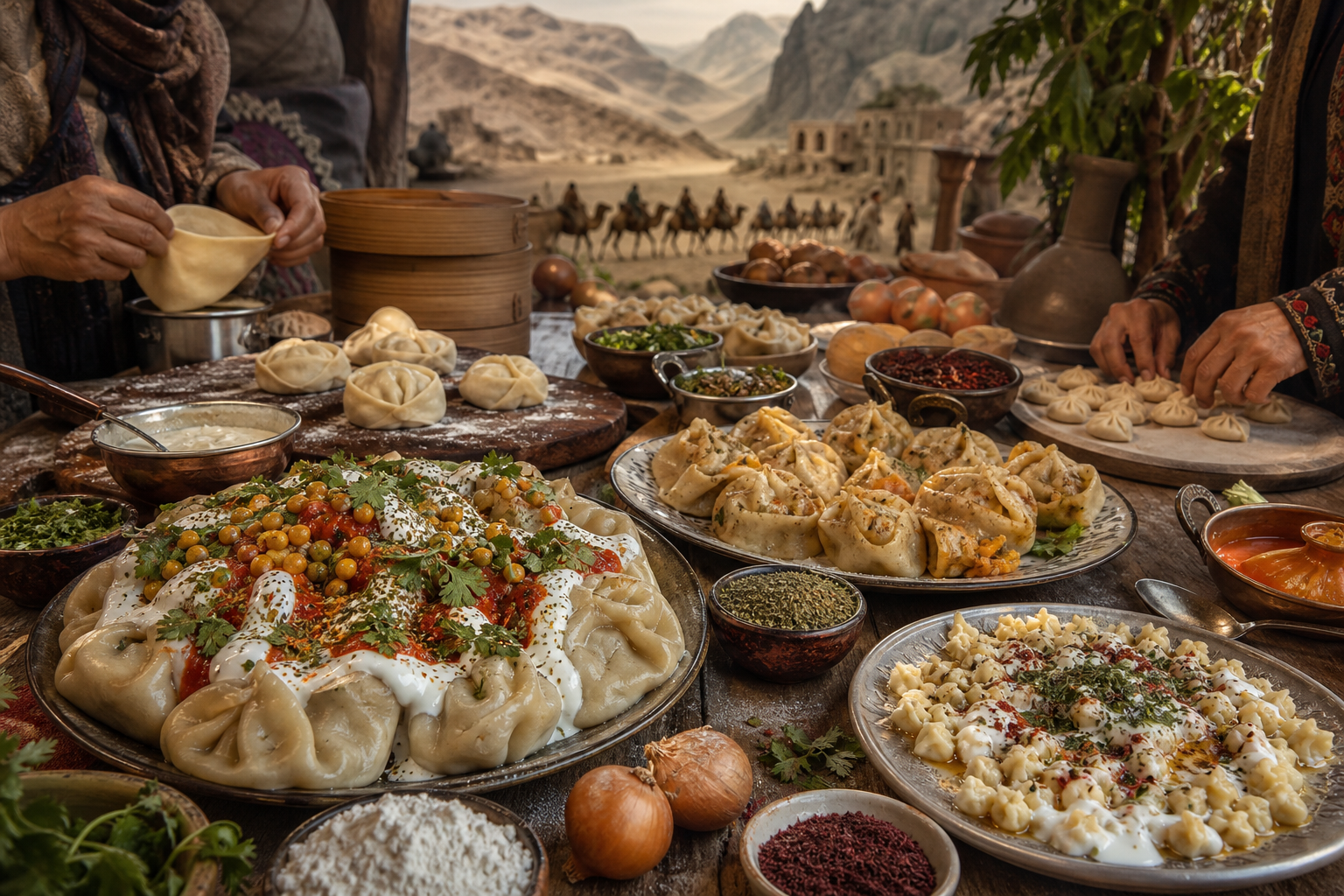
Afghan manto, often spelled mantu or mantoo, is typically filled with ground beef or lamb mixed with onions and spices. The dumplings are steamed until tender, then covered with layers of sauces and garnishes.
A traditional serving may include:
- A tangy tomato-based sauce
- Seasoned yogurt or garlic yogurt
- Dried mint, cilantro, or split peas
- A final scattering of chili, paprika, or ground coriander
Manto is often prepared for gatherings because assembling the dumplings is a communal activity. Families may sit together, folding dozens of pieces while sharing conversation and stories.
The dish balances richness with acidity and freshness. The meaty filling provides depth, while yogurt and herbs keep each bite bright.
Central Asian Connections
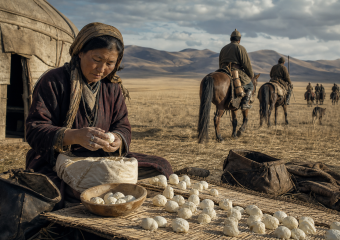
Between Afghanistan and Anatolia lies a broad culinary landscape where related dumplings appear under different names. In Uzbekistan, steamed dumplings called manti are commonly filled with lamb, beef, or pumpkin. Kazakh and Kyrgyz versions may be larger and more rustic, while Uyghur preparations often emphasize lamb, onions, and bold seasoning.
These dumplings reflect the nomadic and urban worlds of Central Asia. Steaming preserves moisture and works well for large batches, while fillings can change with the seasons. Pumpkin, squash, and potatoes may supplement or replace meat, making dumplings practical as well as celebratory.
The variations are not identical copies. Instead, they represent a continuum: a shared culinary grammar expressed through local dialects.
Turkish Mantı: Small Dumplings, Big Tradition
Turkish mantı is usually smaller than Afghan manto and Central Asian manti. In many Turkish households, the ideal dumpling is tiny enough to fit several on a spoon. Preparing them can be a test of patience and skill, especially when made by hand.
The classic filling combines ground meat, onion, salt, and black pepper. The dumplings are boiled and served with garlicky yogurt, melted butter, and spices such as dried mint, pul biber, or sumac.
In Kayseri, a city famous for its mantı, craftsmanship is central to the dish’s identity. Traditional versions are known for their small size and neat folds. A bowl of mantı is therefore more than comfort food; it is evidence of culinary precision passed from one generation to the next.
What Links Manto and Mantı?
Despite regional differences, several features unite these dishes:
- Portable ingredients: Flour, meat, onions, and spices traveled easily.
- Adaptable fillings: Local produce and preferences shaped each recipe.
- Collective preparation: Folding dumplings often brings families together.
- Sauce-based identity: Yogurt, herbs, chili, and tomato create regional character.
- Celebratory meaning: Dumplings frequently appear at holidays, weddings, and family gatherings.
Their similarities suggest movement and exchange, but they do not point to one simple origin story. Food traditions rarely travel in straight lines. They are borrowed, adapted, renamed, and reinvented over centuries.
A Culinary Journey Across 6,400 Kilometers
The route from Afghan manto to Turkish mantı spans roughly 6,400 kilometers of landscapes, languages, and histories. Yet the dumpling remains recognizable along the way.
Each version preserves the fundamental pleasure of the form: a tender wrapper giving way to a fragrant filling, followed by sauces that reflect the place where it is served. The result is a culinary continuum—one that connects kitchens across the Silk Road without erasing their differences.
In every fold, these dumplings carry a small record of migration, memory, and shared invention.