How the Columbian Exchange Permanently Changed Global Spice Routes
How the Columbian Exchange Permanently Altered Global Spice Routes
Before 1492, spices moved through established networks linking Asia, the Middle East, Africa, and Europe. Cinnamon, cloves, nutmeg, pepper, and ginger traveled along land and sea routes shaped by geography, politics, and seasonal winds. The Columbian Exchange permanently disrupted these patterns by connecting the Eastern and Western Hemispheres and introducing new crops, commodities, and commercial ambitions into the global economy.
The result was more than an exchange of plants. It was a transformation of taste, trade, empire, and the strategic importance of ports around the world.
Spice Routes Before the Columbian Exchange
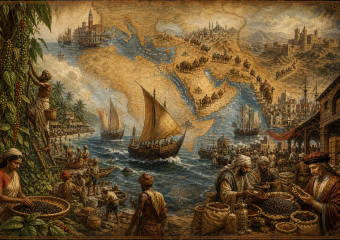
For centuries, Asian spices reached European consumers through complex networks. Pepper from India moved across the Indian Ocean to ports in the Middle East, while cloves and nutmeg from the Moluccas, or Spice Islands, traveled through Southeast Asian trading centers.
Arab, Persian, Indian, and Chinese merchants played major roles in this commerce. European buyers often encountered spices only after several intermediaries had handled them, increasing their prices and encouraging European powers to seek direct maritime routes.
Spices were valuable for culinary, medicinal, and religious reasons. Their high value relative to weight made them ideal cargo for long-distance trade. Control over the routes could therefore generate enormous wealth.
New Crops Enter the Global Market
The Columbian Exchange introduced American plants to Europe, Africa, and Asia. Some were not traditional spices, but they dramatically changed global flavor systems. Chili peppers were especially influential.
Native to the Americas, chili peppers spread rapidly after European voyages. Portuguese traders carried them to Africa, India, Southeast Asia, and China. They grew easily in many climates and were cheaper than black pepper, making pungent food accessible to broader populations.
Chilies soon became central to cuisines far from their place of origin:
- India incorporated them into curries and pickles.
- Korea adopted them into dishes such as kimchi.
- China used them extensively in Sichuan and Hunan cooking.
- West and Central African cuisines developed new sauces and seasoning traditions.
This transformation shows how the Columbian Exchange did not simply add foods to existing diets. It changed the identity of regional cuisines.
The Rise of New Commercial Commodities
The exchange also expanded demand for products that became closely tied to plantation economies. Sugar, first cultivated in the Old World, was transformed in the Americas through European colonization, enslaved labor, and large-scale production.
As sugar became more widely available, spices such as cinnamon, nutmeg, ginger, and cloves gained new importance as flavoring agents. Sweetened drinks, pastries, preserves, and desserts created additional markets for imported spices.
Cacao followed a similar path. Indigenous American societies had long consumed cacao, but European processing methods and sugar reshaped it into chocolate. The growing popularity of chocolate connected American agriculture with Asian spice production, European manufacturing, and Atlantic shipping.
European Empires Redirect Global Trade
The search for spices helped drive Portuguese and Spanish exploration, followed by Dutch, English, and French competition. Once European fleets entered the Indian Ocean and Southeast Asian waters, they attempted to control production centers and shipping lanes directly.
The Portuguese seized or fortified key ports, including Goa and Malacca. Later, the Dutch East India Company imposed strict controls over cloves, nutmeg, and mace in the Moluccas. These policies included military intervention, forced cultivation, and the destruction of trees when supplies exceeded European demand.
Spice routes therefore became instruments of empire. Trade was no longer governed only by independent merchants and regional markets. European states and chartered companies used violence, monopolies, and colonial administration to reshape the movement of goods.
Atlantic and Pacific Networks Become Connected
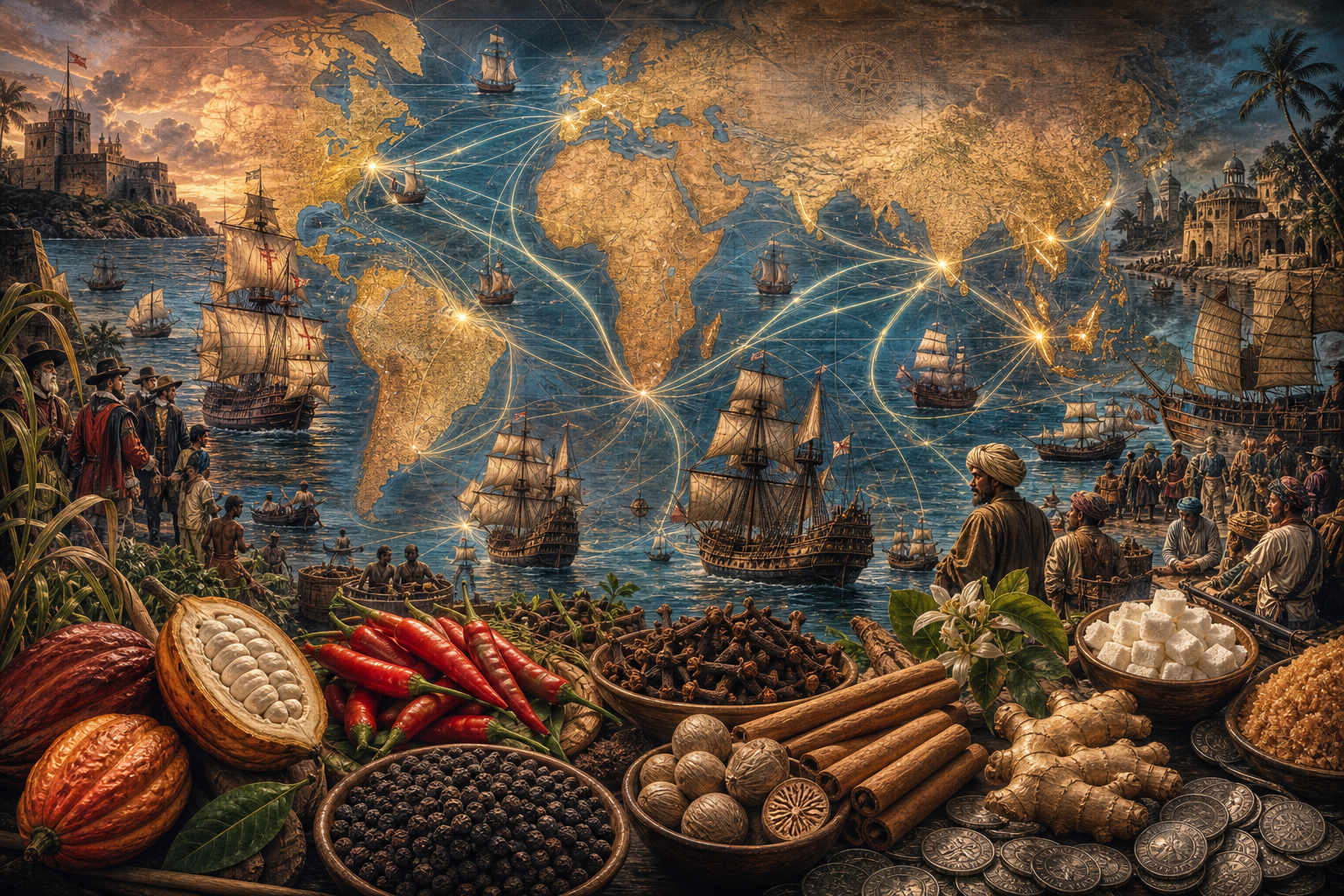
The Columbian Exchange linked the Atlantic and Pacific worlds more closely than ever before. Spanish ships transported American silver across the Pacific to Manila, where it entered Asian markets. Silver helped finance the purchase of Chinese goods, including silk and spices.
At the same time, crops and commodities moved through Atlantic ports, connecting the Americas with Europe and Africa. These routes created a global commercial system in which spices could travel through multiple oceans before reaching consumers.
The old spice routes did not disappear, but they became part of a wider and more competitive network. Their direction, ownership, and economic significance changed permanently.
A Lasting Global Legacy
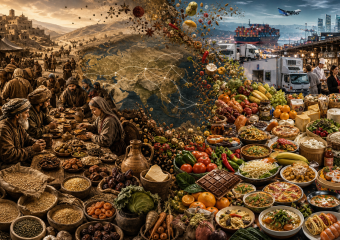
The Columbian Exchange altered global spice routes by introducing new flavors, expanding markets, and empowering colonial empires. Chili peppers became staples across Asia and Africa, while sugar and cacao increased demand for imported seasonings. European powers converted strategic ports and islands into centers of imperial control.
Modern food cultures still reflect this history. The heat of an Indian curry, the chili-based flavors of Korean cuisine, and the spiced chocolate traditions of Europe all reveal connections created through migration, commerce, and conquest.
The lasting importance of the Columbian Exchange lies in this complex legacy: it brought societies closer together while also intensifying exploitation and inequality. Global spice routes became faster and more integrated, but they were built through systems that permanently changed the world.