How did the human brain evolve the ability to nest ideas within ideas? Explore how parietal globularization may have created the mental workspace needed for recursive grammar and the rise of complex language.
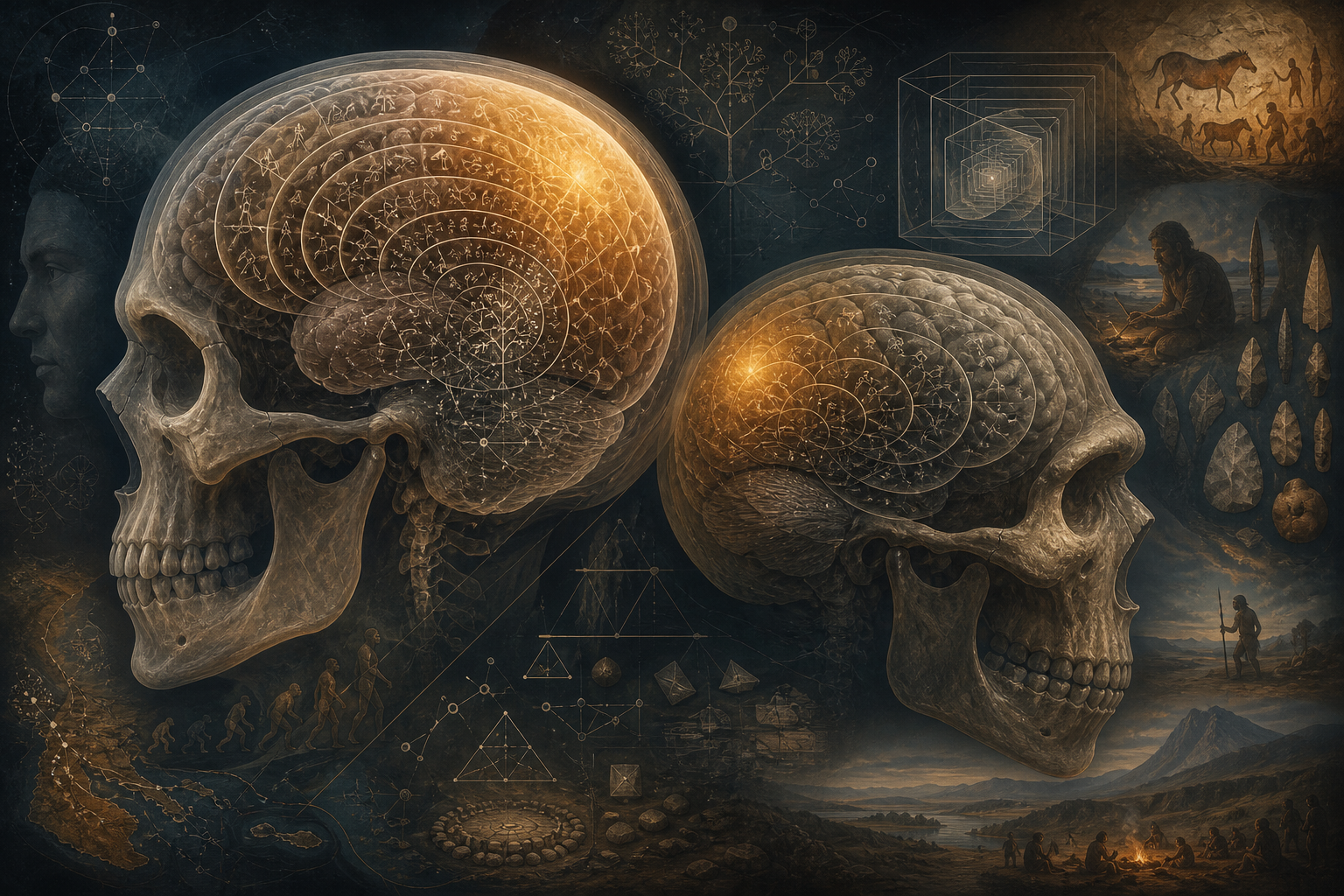

How did the human brain evolve the ability to nest ideas within ideas? Explore how parietal globularization may have created the mental workspace needed for recursive grammar and the rise of complex language.

Algorithmic glottochronology combines vocabulary change, archaeology, and ancient DNA to trace how Yamnaya-related populations may have carried Indo-European languages across Europe and Asia. By modeling borrowing, migration, and uneven rates of language change, researchers can explore multiple pathways spanning roughly 6,500 years.
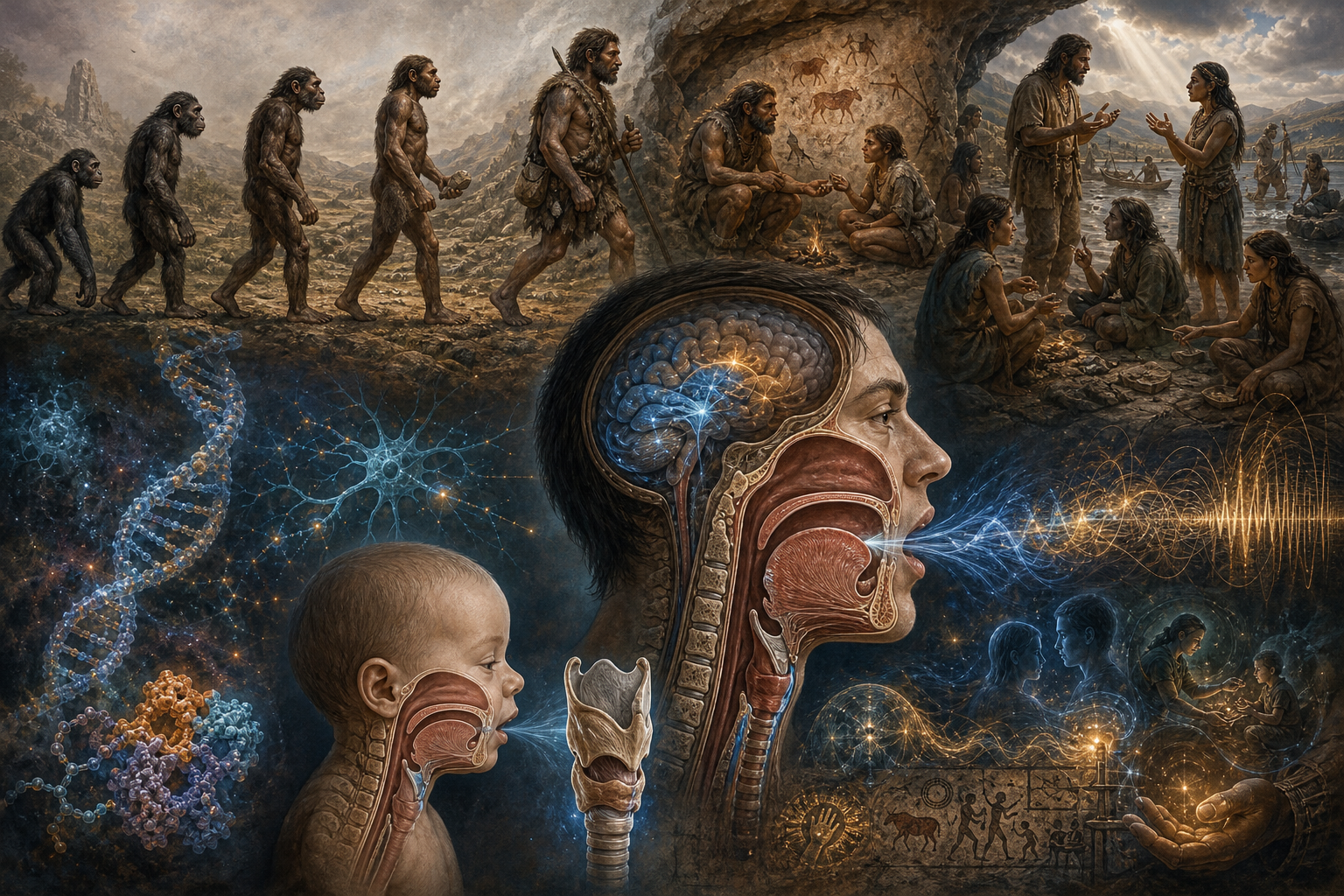
Explore how the FOXP2 gene and the descended larynx each illuminate part of language evolution—while revealing why human speech emerged through many interacting biological and cultural changes.

Trace *ph₂tḗr* from Proto-Indo-European to English and discover how Grimm’s Law transformed an ancient word into the familiar “father.” Along the way, compare its fascinating relatives in Latin, Greek, Sanskrit, and Germanic languages.