Qurut: How Nomadic Fermented Whey Sustained Steppe Armies
The Story of Qurut: How Nomadic Fermented Whey Sustained Steppe Armies
Across the grasslands of Central Asia, food had to be portable, durable, and rich in energy. For nomadic communities, the ability to preserve dairy products could mean the difference between comfort and hardship—or even survival. Among the most important traditional foods was qurut, a dried, fermented dairy product made from strained yogurt or whey.
Small, hard, and surprisingly long-lasting, qurut traveled easily with herders and warriors. It provided nourishment during long migrations, harsh winters, and military campaigns across the steppe.
What Is Qurut?
Qurut is commonly made from fermented milk, yogurt, or the remaining whey after butter and cheese production. Its exact preparation varies from region to region, but the basic process is straightforward:
- Milk is fermented into yogurt or a similar cultured product.
- The liquid is strained, leaving a thick, sour mass.
- Salt is added for flavor and preservation.
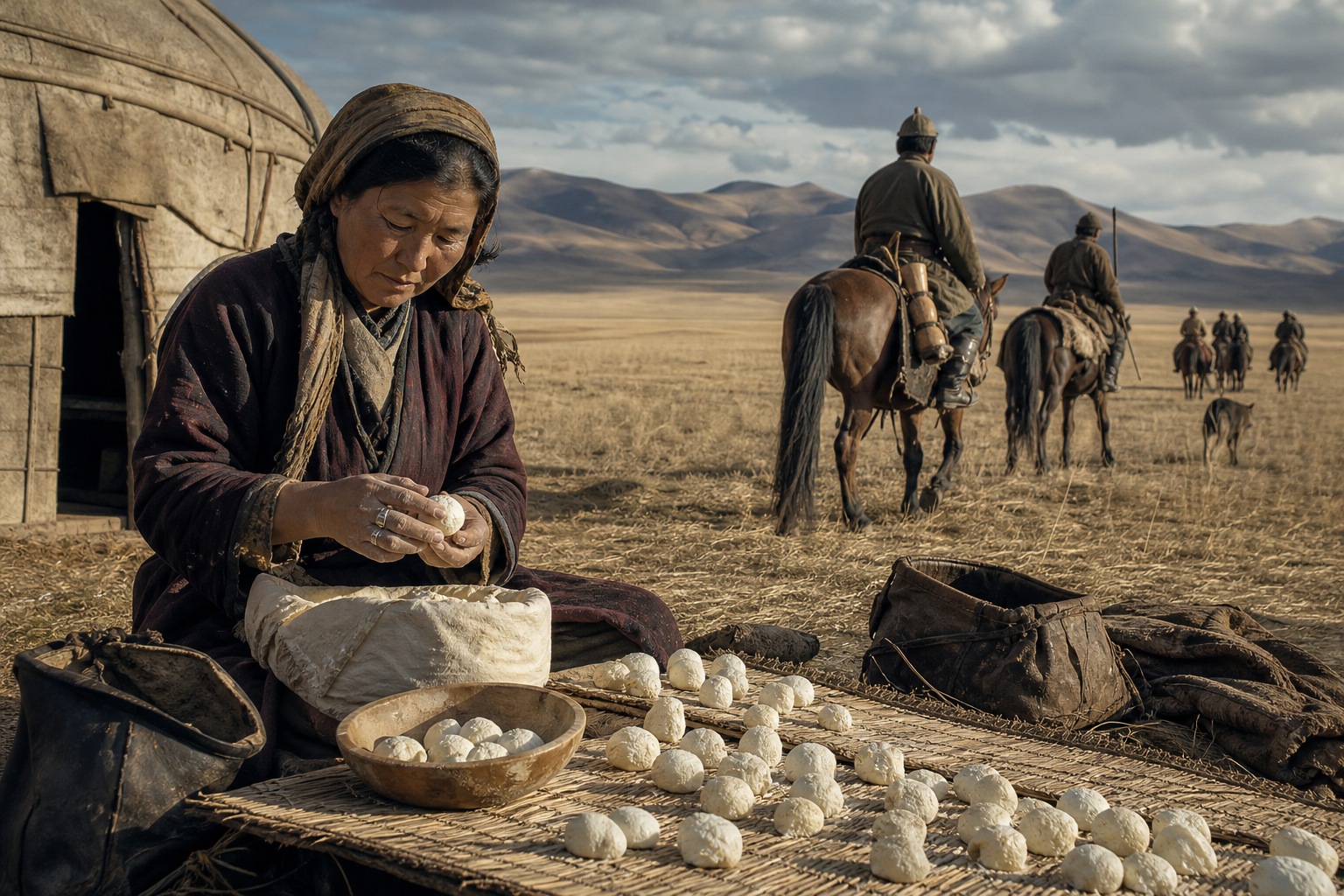
- The mixture is shaped into balls, cakes, or small pieces.
- It is dried in the sun or open air until hard.
The result is a concentrated food with a tangy, salty flavor. Depending on local traditions, qurut may be crumbly, rock-hard, or slightly soft. It can be eaten on its own, dissolved in water to make a drink, or added to soups and stews.
Why It Mattered to Nomadic Life
Nomadic societies depended heavily on livestock, including sheep, goats, horses, cattle, camels, and yaks. Milk was available in abundance during certain seasons, but fresh dairy spoiled quickly. Qurut solved this problem by transforming perishable milk into a food that could be stored and transported.
Drying removed much of the moisture that allowed bacteria to multiply. Salt and fermentation added further protection. Properly prepared qurut could remain edible for months, making it especially valuable during periods when animals produced less milk or when fresh food was difficult to obtain.
Its practical advantages were considerable:
- It was lightweight and easy to carry.
- It required no special containers.
- It resisted spoilage in dry climates.
- It supplied protein, fat, minerals, and salt.
- It could be rehydrated with water.
- It used nearly every part of the available dairy supply.
For people constantly moving between seasonal pastures, these qualities made qurut an ideal travel food.
Qurut and Steppe Armies
The same features that benefited herders also made qurut useful to armies. Steppe warfare depended on speed and mobility. Mounted soldiers could travel great distances, but they could not carry large quantities of fresh provisions. Their supplies had to be compact, durable, and easy to consume while on the move.
Qurut fit this military lifestyle perfectly. Warriors could carry dried pieces in leather bags, saddle packs, or clothing. When needed, they could chew it slowly, soften it with saliva, or dissolve it in water. Mixed with grain, meat, or herbs, it could become a simple but sustaining meal.
The salty flavor was also useful after long rides, particularly in dry or hot conditions when the body lost fluids and electrolytes. While qurut was not a complete diet by itself, it complemented other staples such as dried meat, roasted grains, fermented mare’s milk, and flatbread.
Historical accounts of steppe campaigns often emphasize the importance of logistics. Armies that could live from their herds and carry concentrated provisions had a major advantage over forces dependent on fixed supply lines. Foods such as qurut helped make long-distance movement possible.
More Than a Survival Food
Qurut was not merely emergency rations. It held an important place in everyday culture. Families prepared it during the dairy-rich seasons and stored it for winter. Its production reflected practical knowledge passed from one generation to the next.
Different communities developed their own varieties. Some shaped qurut into small balls, while others formed thin disks or larger cakes. It could be made more sour, more salty, or mixed with local herbs. In some regions, it remains a common snack; in others, it is used as the base for traditional soups and sauces.
The food also represents a broader principle of nomadic cuisine: preservation was not separate from daily life but central to it. Fermentation, drying, smoking, and salting allowed communities to turn seasonal abundance into year-round security.
The Legacy of Qurut
Today, qurut continues to be made across parts of Central Asia and neighboring regions, including Kazakhstan, Kyrgyzstan, Uzbekistan, Mongolia, and Afghanistan. Modern refrigeration has reduced the necessity of preserving dairy in this way, but the tradition has survived because of its distinctive taste and cultural importance.
The story of qurut reveals how a simple food could support an entire way of life. It nourished families, accompanied herders across open pasture, and helped armies remain mobile far from settled supply centers. In every small dried piece was a practical response to the challenges of the steppe: distance, climate, scarcity, and movement.
Qurut endured because it was more than fermented whey. It was portable knowledge, preserved food, and a lasting symbol of nomadic resilience.