1026 CE vs. 2026 CE: How 1,000 Years Reshaped Eurasian Flavors
1026 CE vs. 2026 CE: How 1,000 Years Displaced the Eurasian Flavor Radar
A thousand years can transform a civilization’s sense of taste. Ingredients travel, empires expand, trade routes shift, and familiar flavors are replaced by new culinary reference points. Comparing 1026 CE vs. 2026 CE reveals more than a change in recipes. It shows how Eurasia’s entire “flavor radar”—the ingredients, aromas, textures, and food traditions people recognize as normal—was gradually rearranged.
In 1026, Eurasia was already connected by trade, migration, conquest, and pilgrimage. Yet food cultures remained strongly regional. By 2026, global supply chains, restaurants, media, and industrial agriculture have made distant flavors widely available. The result is a culinary world that is both more diverse and more standardized.
Eurasia in 1026: Regional Flavor Worlds
In 1026 CE, most people ate foods shaped by local climate, agriculture, religion, and social class. Even where long-distance trade existed, imported ingredients were usually expensive, seasonal, or limited to elite households.
The core flavor families
Across Eurasia, several broad flavor traditions were already established:
- The Mediterranean and Middle East: olive oil, wheat, grapes, dates, sesame, garlic, herbs, and fermented sauces
- South Asia: rice, lentils, ghee, black pepper, cardamom, ginger, and complex spice blends
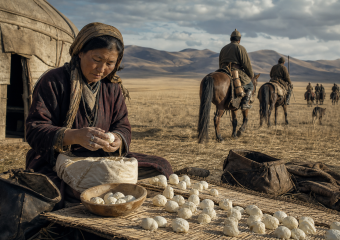
- Central Asia: dairy, lamb, millet, dried fruit, onions, and preserved meats
- China and East Asia: rice, soy, tea, vinegar, fermented bean products, and aromatic oils
- Northern Europe and the Eurasian steppe: rye, barley, cabbage, fish, root vegetables, honey, and animal fats
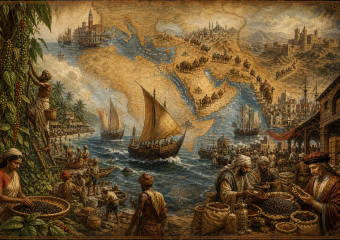
These regions were not isolated. Caravans and ships moved pepper, silk, sugar, tea, grains, and dried fruits over enormous distances. However, trade did not mean mass availability. A spice could be known in one city while remaining virtually absent from ordinary kitchens hundreds of miles away.
Flavor was therefore highly local. People generally understood food through what could be grown, herded, hunted, fermented, or traded nearby.
The Great Disruptors of Taste
Between 1026 and 2026, Eurasia experienced major transformations that altered both what people ate and what they expected food to taste like.
The expansion of trade networks
The growth of the Silk Roads, Indian Ocean trade, and Mediterranean commerce connected more producers and consumers. Sugar, citrus, spices, rice, and new varieties of fruit gradually entered unfamiliar cuisines.
Trade also moved culinary techniques. Distillation, noodle-making, pickling, baking, and confectionery developed through interaction among cultures rather than within a single national tradition.
The Columbian Exchange
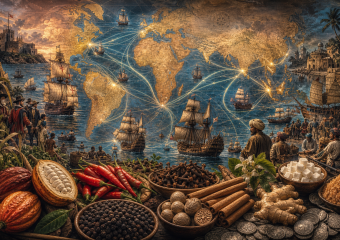
The arrival of crops from the Americas radically changed Eurasian food. Potatoes, tomatoes, chili peppers, maize, cacao, peanuts, and cassava became central to cuisines far from their origins.
Chili peppers are one of the clearest examples. They transformed cooking across South Asia, China, Southeast Asia, the Middle East, and parts of Europe. In 1026, the heat of many modern Eurasian dishes did not yet exist in its current form. By 2026, chili-based flavor is so common that it can feel ancient.
Potatoes followed a similar path. They became essential in European, Central Asian, and other regional cuisines despite being entirely unknown to Eurasian cooks a millennium ago.
From Local Taste to Global Availability
The industrial era accelerated the displacement of Eurasia’s old flavor radar. Railways, refrigeration, steamships, supermarkets, and air freight made food less dependent on distance and season.
By 2026, consumers in many cities can access:
- Fresh fruit from several continents
- Spices blended and packaged for global markets
- Imported cheeses, sauces, teas, and preserved foods
- Restaurant cuisines representing dozens of cultures
- Processed foods engineered for consistent sweetness, saltiness, and texture
This abundance has expanded choice, but it has also encouraged standardization. A tomato grown thousands of miles away may be bred for durability rather than aroma. A curry, noodle dish, or pastry may be adjusted to suit international expectations. Local variation can be softened into a recognizable global style.
What “Displaced” Really Means
The phrase “displaced flavor radar” does not mean older tastes disappeared completely. Many ancient patterns remain visible in modern food: fermentation, grain porridges, flatbreads, herb sauces, dried meats, sour flavors, and dairy preservation all connect 2026 to 1026.
The difference is that modern diners navigate far more reference points. A person may compare a traditional stew with Korean fermentation, Mexican chili heat, Italian acidity, and Japanese umami in the same week. Flavor identity is no longer shaped only by geography. It is also shaped by media, migration, tourism, restaurants, and online culture.
A Thousand Years on the Plate
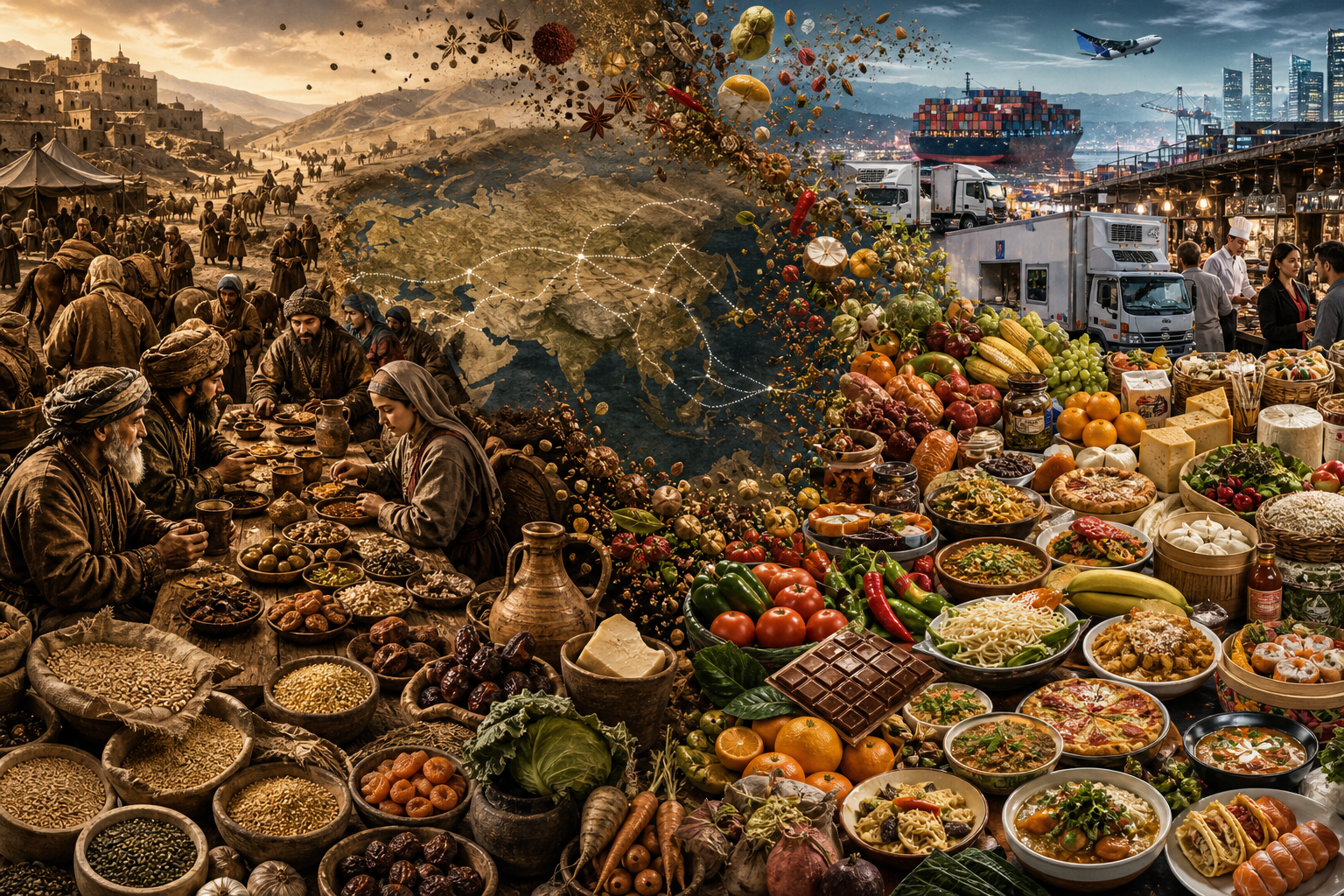
The comparison between 1026 CE vs. 2026 CE shows how food history is really a history of movement. Ingredients crossed borders through trade and conquest, while technologies changed how food could be stored and distributed. Crops from the Americas remade Eurasian cooking, and modern logistics made global flavors everyday experiences.
In 1026, the flavor radar was local but deeply distinct. In 2026, it is global, crowded, and constantly evolving. The modern palate has gained extraordinary range—but understanding that range means remembering that every familiar flavor has a journey behind it.