From Persian Polow to Mughal Biryani: The History of Dum Pukht Rice
From Persian Polow to Mughal Biryani: The Imperial Alchemy of Dum Pukht Rice
Few dishes express the grandeur of South Asian cuisine as vividly as dum pukht rice. Fragrant, layered, and slowly cooked, it represents more than a method of preparing food. It is a culinary story shaped by Persian refinement, Mughal ambition, and the rich regional traditions of the Indian subcontinent.
The result is an aromatic dish in which rice, meat, vegetables, spices, and saffron transform together inside a sealed vessel.
Persian Roots: The Art of Polow
The history of dum pukht begins with Persian polow, a celebrated rice preparation known for its delicate grains and carefully arranged layers. Unlike ordinary boiled rice, polow involved parboiling the grains before finishing them over gentle heat. This technique created a light, separate texture while allowing ingredients such as meat, dried fruit, nuts, herbs, and spices to be layered throughout.
Persian cooks also valued restraint. Fragrance was often more important than fiery heat, with saffron, rose water, cinnamon, cardamom, and dried fruits contributing subtle complexity. This approach would later influence the royal kitchens of the Mughal Empire.
As Persianate culture spread into the Indian subcontinent, polow encountered local ingredients and cooking traditions. Fragrant basmati rice, clarified butter, green cardamom, cloves, chilies, mint, and coriander gradually joined the culinary vocabulary.
Mughal Kitchens and Imperial Transformation
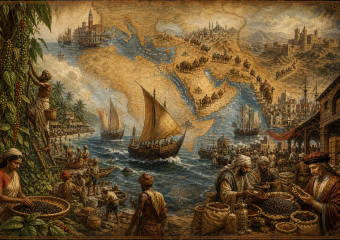
The Mughal courts were centers of artistic and gastronomic exchange. Persian chefs and Indian cooks worked within the same royal kitchens, adapting recipes to new tastes and ingredients. Rice dishes became especially important because they could be made luxurious, nourishing, and visually impressive at once.
Over time, Persian polow evolved into several regional forms of pulao and biryani. The distinction between these dishes has never been entirely fixed, but biryani generally became associated with more assertive seasoning and the use of marinated meat, while pulao often emphasized a gentler, more integrated flavor.
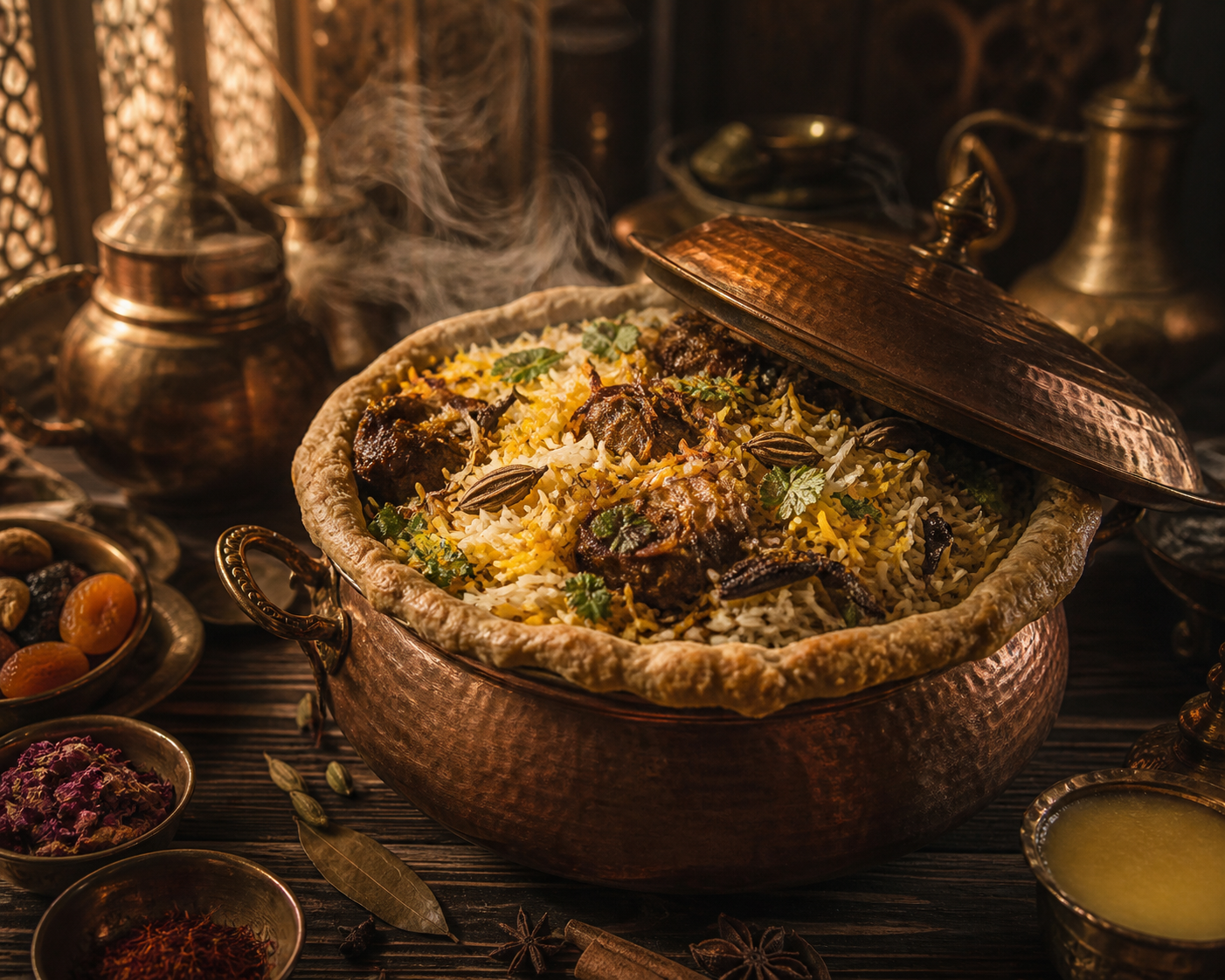
Dum pukht emerged from this world of experimentation. The phrase literally refers to cooking over low heat, traditionally in a sealed pot. Dough is often used to secure the lid, trapping steam and preserving the essential oils of the spices.
The Science of Sealed Cooking
The magic of dum pukht rice lies in controlled, slow cooking. Rice is usually parboiled separately, while meat or vegetables are marinated and seasoned. These components are then arranged in layers, often with fried onions, herbs, saffron-infused milk, and ghee.
Once sealed, the pot is placed over very low heat. Steam circulates inside the vessel, gently cooking the rice and tenderizing the meat. Because the aromas cannot escape, the dish develops an extraordinary depth of fragrance.
This technique also protects the rice from aggressive boiling and excessive stirring. Each grain absorbs the surrounding flavors while retaining its shape. The finished dish should be aromatic rather than greasy, richly seasoned but balanced.
Essential Elements of Dum Pukht Rice
Although recipes vary widely, several features define the style:
- Long-grain rice: Basmati is favored for its fragrance and ability to remain separate.
- Layering: Rice and the seasoned filling are arranged rather than mixed from the beginning.
- Slow heat: Gentle cooking allows flavors to mature gradually.
- Sealed pot: Steam remains trapped, intensifying aroma and moisture.
- Aromatic spices: Cardamom, cloves, cinnamon, bay leaf, and saffron provide warmth and perfume.
- Final resting time: The dish benefits from resting before the seal is opened.
From Courtly Luxury to Regional Classic
Dum pukht became especially associated with the Awadhi cuisine of Lucknow, where royal chefs developed an elegant style centered on subtle spices and refined presentation. Unlike some robust biryanis, Awadhi dum pukht often avoids overwhelming heat, allowing the fragrance of rice, meat, and whole spices to remain prominent.
The technique also inspired variations across India. In Hyderabad, biryani developed a bolder character, frequently featuring marinated meat and stronger seasoning. In Kolkata, potatoes and boiled eggs became familiar additions. Elsewhere, vegetables, paneer, fish, or dried fruits were incorporated according to local tastes.
Each version reflects the same imperial inheritance while expressing a distinct regional identity.
The Lasting Legacy
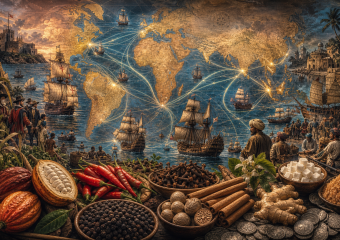
From Persian polow to Mughal biryani, dum pukht rice reveals how cuisine travels and transforms. It is the product of migration, royal patronage, local adaptation, and patient technique.
Today, the dish may be prepared in a restaurant kitchen, a family home, or a festive gathering, but its essential character remains unchanged. Rice is layered, the pot is sealed, and time is allowed to perform its quiet alchemy.
That patience is perhaps the most imperial ingredient of all.