Archaeobotany of Wheat: How Stone-Milled Triticum Shaped Ancient Empires
The Archaeobotany of Wheat: How Stone-Milled Triticum Shaped Ancient Empires
Wheat is more than an ancient food crop. Through the study of charred seeds, pollen, grinding stones, storage facilities, and microscopic plant remains, archaeobotany reveals how Triticum species helped build economies, feed armies, and support the growth of ancient empires.
The history of wheat is therefore also a history of technology, trade, and political power.
From Wild Grasses to Cultivated Wheat
The earliest wheat domestication took place in the Fertile Crescent, a region spanning parts of modern-day Iraq, Syria, Turkey, Israel, Jordan, and Iran. Wild einkorn (Triticum boeoticum) and wild emmer (Triticum dicoccoides) grew naturally across this landscape.
Early farmers gradually selected plants with useful traits, including:
- Larger grains
- Tougher ears that retained mature seeds
- More predictable ripening
- Stalks that were easier to harvest and process
This process produced domesticated einkorn, emmer, and later free-threshing wheats such as durum and bread wheat. Archaeobotanical evidence shows that these changes did not happen overnight. Cultivation and selection unfolded over generations as communities stored, replanted, and exchanged grain.
The result was a crop better suited to human agriculture—but also increasingly dependent on human care.
What Archaeobotany Reveals
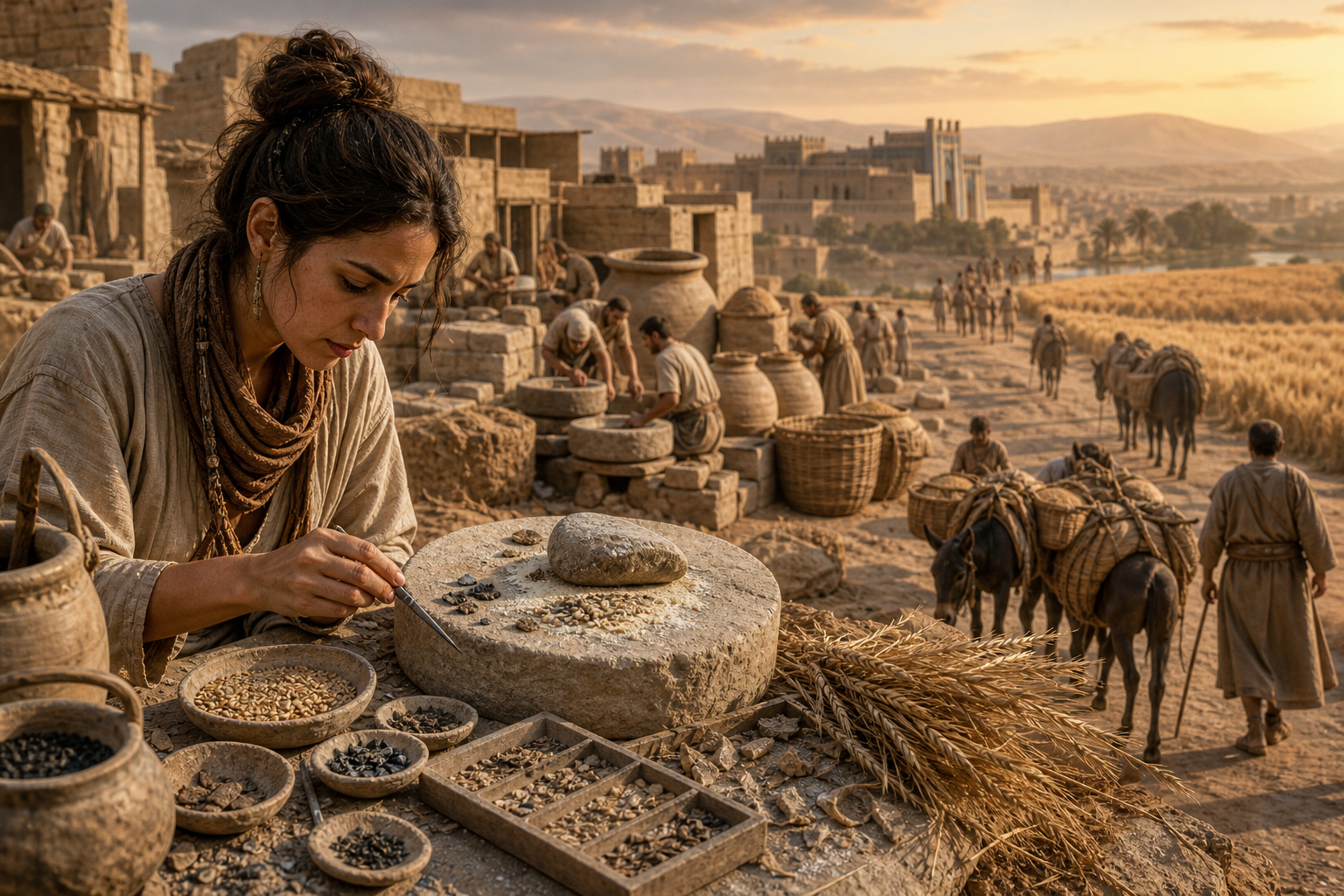
Archaeobotany examines plant remains recovered from archaeological sites. Wheat grains are often preserved when accidentally burned, buried in dry environments, or waterlogged. Although charred grain is altered by heat, its shape can still reveal important information about species, cultivation, and food preparation.
Researchers also study:
- Spikelet bases and chaff
- Weed seeds from harvested fields
- Pollen and phytoliths
- Impressions of grain in ancient mud or pottery
- Grinding stones and milling installations
- Storage jars, silos, and granaries
These remains help reconstruct the entire agricultural system. A high proportion of chaff may indicate local threshing, while concentrations of clean grain may point to storage or redistribution. Weed seeds can reveal harvesting methods, soil conditions, and whether wheat was grown in irrigated or dry fields.
Stone Milling and the Transformation of Grain
Before wheat could become bread or porridge, it had to be processed. Stone milling was one of the most important technologies in the ancient world.
Early communities used saddle querns: a stationary lower stone and a hand-held upper stone. By rubbing or rolling grain between them, people broke the kernels and produced meal. Later, rotary querns made grinding faster and more efficient. These tools appear across the Mediterranean, Near East, and Europe, often in domestic spaces as well as specialized workshops.
Stone milling influenced diet and labor in several ways. Coarsely ground wheat could be cooked into gruel, while finely milled flour supported flatbreads and leavened loaves. However, stone grinding often introduced small mineral fragments into flour. These particles can cause tooth wear, a pattern frequently observed in ancient skeletons.
Grinding was also labor-intensive. In many societies, women, enslaved people, and dependent workers performed the daily task of transforming grain into food. The presence of large milling installations, meanwhile, suggests centralized production and the growing organization of urban economies.
Wheat and the Rise of Ancient States
Reliable grain surpluses allowed rulers to support officials, soldiers, builders, and craft specialists. In Mesopotamia, wheat and barley were collected as taxes, stored in institutional granaries, and distributed through temple and palace systems.
Although barley was often more important in southern Mesopotamia because it tolerated salinity, wheat remained valuable in regions with suitable rainfall and soils. In Egypt, emmer wheat became a major staple. The Nile’s predictable flooding supported intensive agriculture, while centralized administration organized planting, harvesting, storage, and distribution.
Wheat also strengthened military power. Armies required portable, durable food, and grain could be transported as harvested kernels, flour, or baked products. Imperial expansion depended not only on conquest but also on the ability to provision soldiers far from home.
Trade, Adaptation, and Cultural Exchange
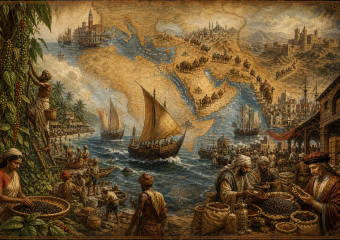
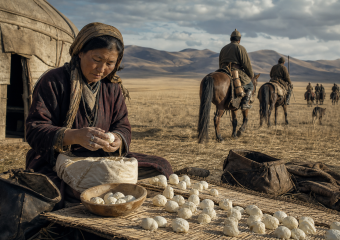
Wheat varieties moved alongside people, animals, tools, and ideas. Archaeobotanical discoveries show that cultivation spread from southwest Asia into the Aegean, Europe, North Africa, and Central Asia. Each region reshaped wheat production according to its climate and farming traditions.
Different species offered different advantages:
- Einkorn was hardy and suited to marginal soils.
- Emmer performed well in several dry-farming environments.
- Durum wheat was valuable for pasta-like foods and semolina.
- Bread wheat produced elastic dough and became especially important in later Mediterranean and European agriculture.
This movement of crops connected distant communities. Wheat was not simply traded as a commodity; it carried knowledge about seasons, field preparation, harvesting, storage, and food preparation.
A Crop That Still Shapes Civilization
The archaeobotany of wheat demonstrates that empires were built on more than monuments and military victories. They depended on seeds, soil, labor, and the technologies that converted harvests into dependable food.
Stone-milled Triticum supported population growth, taxation, trade, and warfare. By tracing its remains through ancient fields, hearths, querns, and granaries, archaeobotanists reveal how a grass from the Fertile Crescent became one of the foundations of urban civilization.